

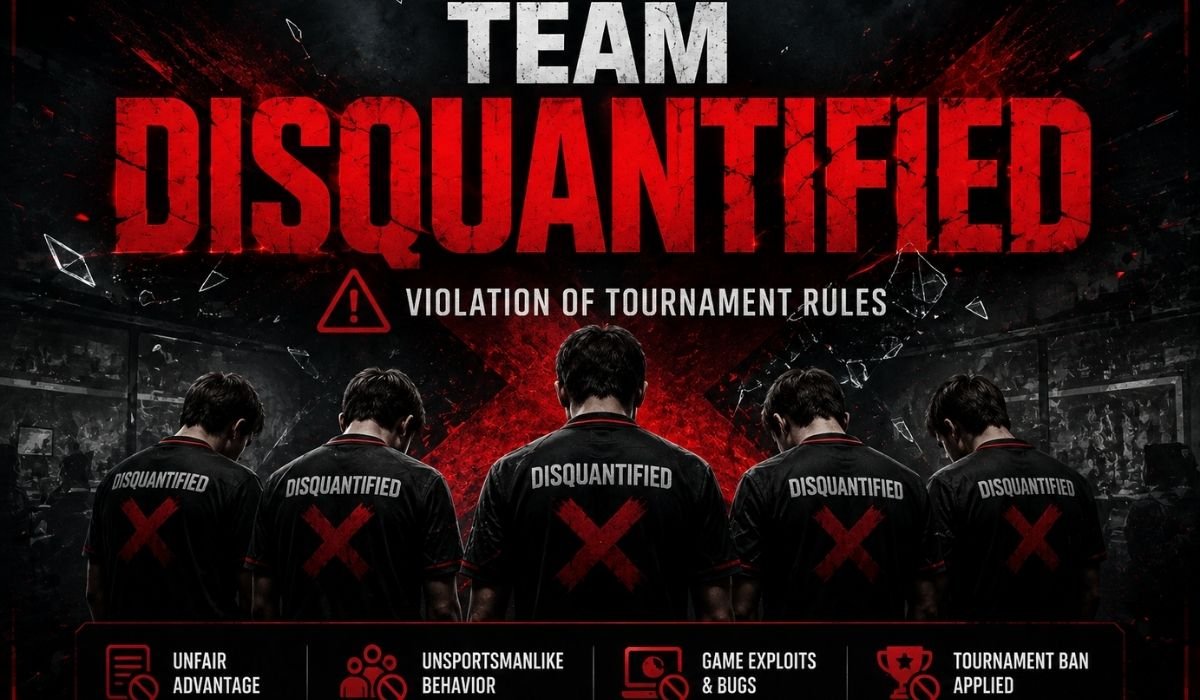
The phrase team disquantified can be confusing when you first see it. It looks like a simple sports term, but its meaning can depend on the situation in which it is used. In most cases, people use “team disquantified” when they want to describe a team that has been removed from a competition, ranking, event, or official result because it failed to meet certain rules or requirements.
Whether the issue involves eligibility, player registration, competition rules, misconduct, or another violation, disqualification can completely change the outcome of a tournament. A team that performs well on the field can still lose its official place if it breaks an important regulation.
This article explains what Team disquantified means, why teams can be disqualified, what happens after a disqualification, and why competition rules are so important.
What Does Team Disquantified Mean?
The term team disquantified is generally intended to refer to a disqualified team. The standard English word is “disqualified,” while “disquantified” may appear as a spelling mistake, search phrase, or informal variation.
When a team is disqualified, it means the team is no longer allowed to continue in a particular competition or is removed from an official result. The decision is usually made by the organization, tournament officials, governing body, or competition committee responsible for enforcing the rules.
For example, a football team could be disqualified if it uses an ineligible player. Similarly, a basketball team might face disqualification for violating tournament regulations. In esports, a team could be removed because of cheating, prohibited software, or other serious rule violations.
The exact reason depends on the competition and its rulebook.
Why Can a Team Be Disqualified?
There are many reasons why a team can receive a disqualification. Some are related to players, while others involve administration, conduct, or technical rules.
Using an Ineligible Player
One of the most common reasons for team disqualification is the use of a player who was not legally eligible to participate.
A competition may have rules about age, nationality, registration, transfers, or previous participation. If a team fields someone who does not satisfy those requirements, officials may investigate the situation.
Even if the team did not intentionally break the rules, the governing body may still impose a punishment.
Breaking Competition Rules
Every organized competition has its own rules. These can cover everything from uniforms and player registration to match procedures and equipment.
When a team seriously violates these rules, officials can impose penalties. In some cases, the punishment may be a warning or fine. However, serious violations can result in disqualification.
Cheating or Unfair Advantages
Fair competition is one of the most important principles in sports and gaming. Teams that deliberately attempt to gain an unfair advantage can face severe consequences.
In esports, for example, cheating software, unauthorized modifications, account sharing, or other prohibited methods may result in immediate removal from a tournament.
Traditional sports also have strict rules designed to prevent unfair advantages.
Misconduct
Team behavior can also lead to disciplinary action. Serious misconduct involving players, coaches, or team officials may result in suspension or disqualification.
Competition organizers generally expect teams to follow codes of conduct. Violence, deliberate interference, harassment, or repeated unsportsmanlike behavior can become serious disciplinary matters.
Administrative Problems
Sometimes a team can face problems away from the actual playing field.
Missing registration documents, failing to meet deadlines, submitting incorrect information, or ignoring tournament requirements can cause problems. Large competitions often have detailed administrative procedures, and teams are expected to follow them carefully.
An administrative violation may seem small, but it can have major consequences when the rules clearly state that compliance is mandatory.
What Happens When a Team Is Disqualified?
The consequences of disqualification depend on the competition’s rules.
In some situations, the team is removed from the tournament immediately. Previous results may also be cancelled or changed. In other cases, the team may lose points, prizes, ranking positions, or qualification status.
For example, imagine a team reaches the final of a tournament but officials later discover that an ineligible player participated in earlier rounds. The organizers may remove the team from the Competition and adjust the tournament bracket.
This can affect other teams as well. A team that previously lost to the disqualified team could potentially receive another opportunity, depending on the rules.
Therefore, disqualification is rarely an isolated event. It can change the entire competitive structure.
Team Disquantified vs. Team Eliminated
It is important to understand the difference between disqualification and normal elimination.
A team is eliminated when it loses according to the competition format. For example, if a football team loses a knockout match, it may simply be eliminated.
Disqualification is different.
A disqualified team may have won its matches but still be removed because of a rule violation or eligibility problem.
This distinction matters because elimination is normally part of the competitive process, while disqualification is a disciplinary or regulatory decision.
In simple terms:
- Eliminated: The team loses according to the competition format.
- Disqualified: The team is removed because it failed to satisfy a rule or requirement.
- Withdrawn: The team chooses, or is permitted, to leave the competition.
- Suspended: The team or participants are temporarily prohibited from competing.
These terms can sometimes appear together, but they do not mean exactly the same thing.
How Disqualification Affects Players
A team disqualification can be difficult for players because they may have worked for months or years to reach an important competition.
Players can lose the opportunity to compete, receive prizes, advance to the next round, or improve their rankings. In some cases, individual players may also face separate disciplinary action.
However, not every player necessarily receives the same punishment. Officials normally examine the circumstances and applicable rules before deciding what action should be taken.
For this reason, teams should make sure every player understands the competition requirements before participating.
How Disqualification Affects Fans
Fans are also affected when a popular team is disqualified.
Supporters may have purchased tickets, traveled to events, or invested time following the team throughout a tournament. A sudden disqualification can therefore create disappointment and confusion.
Social media can make these situations even more complicated. Rumors can spread quickly before an official investigation is completed.
The best approach for fans is to wait for information from the competition organizer or governing body instead of relying entirely on unofficial posts.
Can a Disqualified Team Appeal?
In many competitions, teams have the right to appeal a disqualification.
An appeal gives the team an opportunity to challenge the decision or present additional evidence. The exact process depends on the organization and its regulations.
A team may argue that:
- The rule was misunderstood.
- The evidence was incorrect.
- The violation was accidental.
- The punishment was excessive.
- New information has become available.
- The team complied with a different interpretation of the regulations.
However, an appeal does not automatically mean the original decision will be reversed.
Officials or an independent disciplinary panel may review the case and then decide whether the punishment should remain, be reduced, or be cancelled.
Why Competition Rules Matter
Competition rules exist to protect fairness.
Without clear regulations, teams could interpret important requirements differently, creating confusion and unfair advantages. Rules establish a common standard that everyone is expected to follow.
Professional teams often have managers, coaches, legal advisers, and administrative staff who carefully review regulations. Smaller teams may not have the same resources, but they still need to understand the rules.
Reading the rulebook before a tournament can prevent many avoidable problems.
How Teams Can Avoid Disqualification
Teams can take several practical steps to reduce the risk of being disqualified.
First, they should carefully review the official competition regulations. Player eligibility should be checked before registration and again before important matches.
Second, teams should keep accurate documentation. Registration forms, identification records, transfer documents, and other required information should be stored properly.
Third, players and coaches should understand the code of conduct. Avoiding unnecessary conflicts and following officials’ instructions can prevent disciplinary problems.
Finally, teams should ask tournament organizers for clarification when a rule is unclear. It is much better to ask a question before a competition than to discover a serious problem afterward.
The Importance of Official Information
When people search for team disquantified, they may be looking for information about a specific team that has recently been removed from a competition.
In such cases, it is important to identify the actual event, team, sport, and governing organization. A short social media post may not provide enough information to understand why a team was disqualified.
Official announcements are usually the most reliable source because they can explain the rule involved, the decision made, and any available appeal process.
Readers should also be careful with headlines. Sometimes a headline says that a team has been “disqualified,” while the actual situation involves a temporary suspension, investigation, or technical penalty.
Final Thoughts
The phrase team disquantified is commonly used to describe a team that has been disqualified, although “team disqualified” is the standard English expression.
Disqualification can happen for many reasons, including using an ineligible player, breaking competition rules, cheating, misconduct, or failing to meet administrative requirements. Unlike normal elimination, disqualification is generally connected to a rule or eligibility issue.
The impact can be significant. A team may lose its place in a tournament, while players, fans, opponents, and organizers can all be affected by the decision.
For teams, the best protection is preparation. Understanding the rules, checking player eligibility, keeping documents organized, and communicating with competition officials can help prevent avoidable problems.
Ultimately, fair competition depends on everyone following the same standards. When a team is disqualified, the decision may be disappointing, but the purpose of competition regulations is to protect the integrity of the event and ensure that every participant competes under the same conditions.
FAQs
What does team disquantified mean?
Team disquantified is generally a misspelling or variation of “team disqualified.” It refers to a team being removed from a competition because of a rule violation, eligibility issue, misconduct, or another qualifying problem.
Is disqualification the same as elimination?
No. Elimination normally happens because a team loses according to the tournament format. Disqualification happens because a team fails to meet a rule or requirement.
Can a disqualified team appeal?
Many competitions provide an appeal process, although the rules vary between organizations. A team may be able to submit evidence or challenge the decision within a specific deadline.
Can one player’s actions disqualify an entire team?
Yes. Depending on the competition rules, an individual player’s eligibility issue or serious misconduct can sometimes result in consequences for the entire team.
How can teams avoid disqualification?
Teams should read the official rules, verify player eligibility, submit accurate documents, follow deadlines, and ensure that players and staff understand the competition’s code of conduct.
Read More About : Fluxenia
